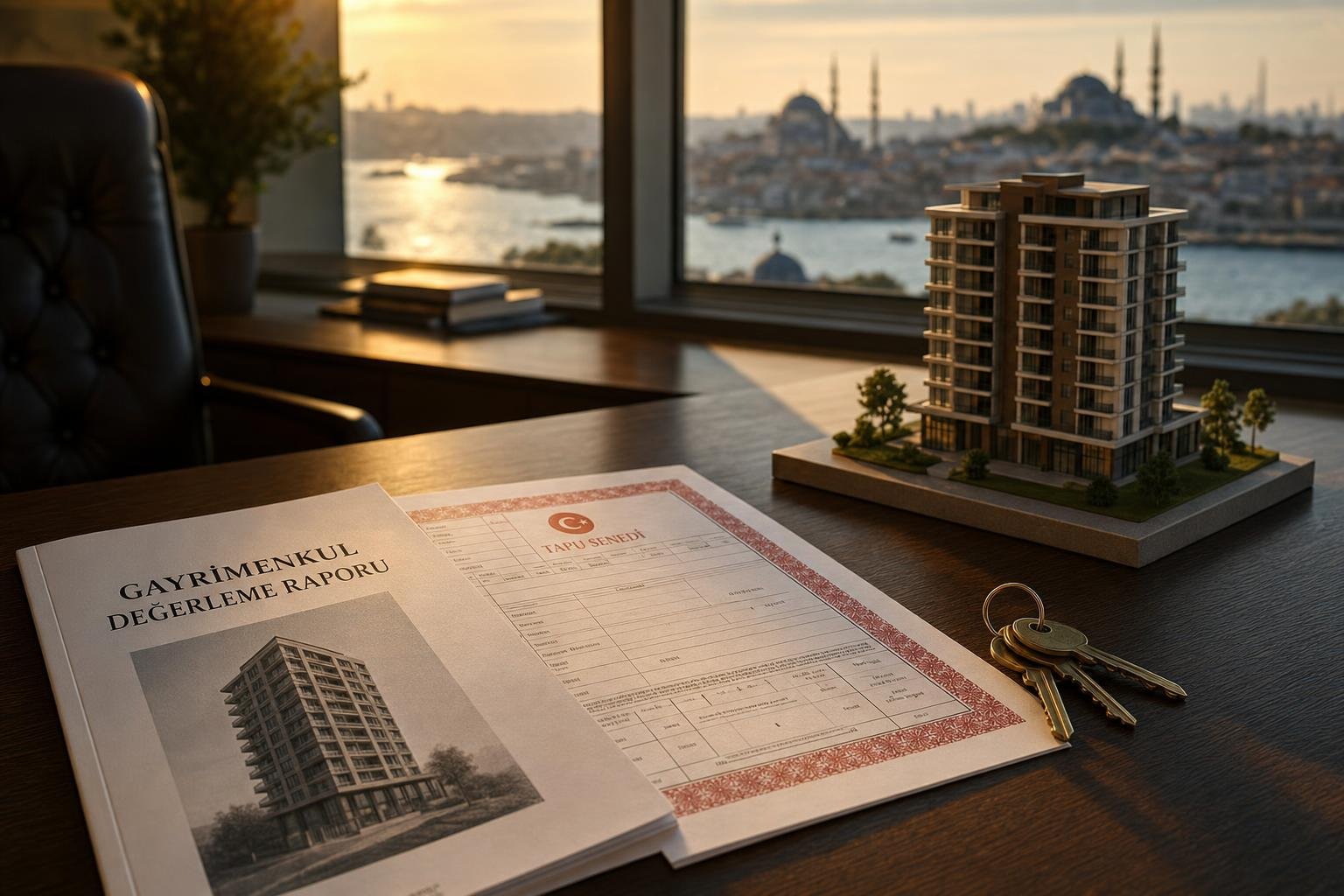
From property to passport: the 2026 timeline
A clear 2026 walkthrough of Turkish citizenship by investment: tax number, Tapu, SPK valuation, DAB, Certificate of Conformity, residence permit, biometrics and passport.

Most applicants picture a simple swap: buy a property, receive a passport. The reality is a defined chain of state checks, each with its own document and its own authority. Get the sequence right and the whole thing runs in roughly three to six months. Get it wrong — a missing certificate, an expired report — and you wait.
Here is what the 2026 journey actually looks like, stage by stage. One headline change: from 9 February 2026, Istanbul offers a same-day biometrics procedure that compresses what used to take two visits and a multi-day wait.
Stage 1 — Tax number and a Turkish bank account
Everything starts with a Turkish tax number, now obtainable fully online through the Interactive Tax Office. With it, you open an account at a Turkish (BDDK-supervised) bank.
This has to come first, because the entire investment must flow through that account for the currency conversion to be documented properly.
Stage 2 — SPK valuation and confirming eligibility
An SPK-licensed valuation report must confirm the property is worth at least $400,000. Crucially, eligibility is judged on this appraised value, not the price you negotiate.
Remember the three-value rule: the paid price, the appraisal, and the value declared at the Land Registry must all clear the threshold.
Stage 3 — Paying correctly: FX conversion and the DAB
Your funds are converted to lira via the Turkish bank and sold to the Central Bank. The bank issues a foreign-exchange purchase certificate (DAB) — the proof the state needs that the money arrived through official channels.
Paying the seller directly in foreign currency, outside the banking system, is the classic way to invalidate an otherwise-good file.
Stage 4 — Title deed transfer and the 3-year annotation
The title (Tapu) is transferred at the Land Registry with a mandatory three-year no-sale annotation recorded against it. That annotation is your commitment to the holding period and protects the integrity of the program.
In practice, the property, banking and transfer steps together typically run about one to three weeks.
Stage 5 — The Certificate of Conformity
The Land Registry (TKGM) verifies that the transfer, the annotation, the SPK appraisal and the DAB all align, then issues the Certificate of Conformity (Uygunluk Belgesi) — the gateway document for the citizenship application.
This usually follows the deed and annotation by about one to two weeks.
Stage 6 — Residence permit and biometrics
CBI applicants file for a short-term residence permit, and the main applicant and spouse must attend in person for biometrics in Turkey.
From February 2026, Istanbul's same-day priority procedure lets eligible applicants complete residence-permit approval and the citizenship submission in a single day, where it previously meant two visits and a wait of several business days.
Stage 7 — Filing the citizenship application
The complete file goes to the General Directorate of Population and Citizenship Affairs. Personal documents must be in order:
- Passport and biometric photos
- Birth certificate and marriage / marital-status certificate — apostilled, translated and notarised
- A clean criminal record, generally dated within the last six months
The security and background review is the longest single phase — commonly two to four months.
Stage 8 — Presidential approval and passport
The final decision rests with the President of the Republic. Once granted, the citizenship certificate is issued and the passport typically follows within a week or two.
Realistic total: about three to six months from completed investment to passport, faster under the 2026 streamlining — but every figure here depends on authority workload and a complete, correctly sequenced file. Most delays are self-inflicted, through errors in the valuation, the DAB or the apostilles. Build in a buffer, and get the sequence right the first time.
Sources
- Global Citizen Solutions — Turkey CBI process
- IMI Daily — Same-day biometrics for CBI applicants
- Aqar — Required documents (2026)
- Tenha Law — Turkish citizenship by real estate
Figures are indicative for 2026 and change with policy and the exchange rate. This article is general information, not legal, tax or investment advice. We confirm current requirements for your specific case.